

Innovators are the garrison of a sacred intersection, the Venn overlap of commercial viability and technical feasibility. In my 25 years in tech I’ve found that the biggest wastes of time are consultants pimping out use cases as if the C-Suite goes shopping at the Use Case Store, followed by PowerPoint funerals. Big consulting loves to do the hug of death with slides and preach “all the capabilities they have to bring to bear” which translates to more LCATs and higher costs to my end clients. As an innovation engineer, I wake up looking for an impossible problem to solve; so how do I find problems faster?
How Many Consultants Does it Take to Find a Screwdriver?
There was already a “Makerpsace” in the company, an empty room filled with office room furniture as seen below. I remember it clearly, a spring day in early 2023 where my team and I had to swap a PCIe card in a Dell server in this room. It took three consultants one hour to find a Phillips head screw driver; in the Makerspace. While I’m sure there’s a good joke there, it was the moment I realized the ego behind the space was larger than the skills to develop it.
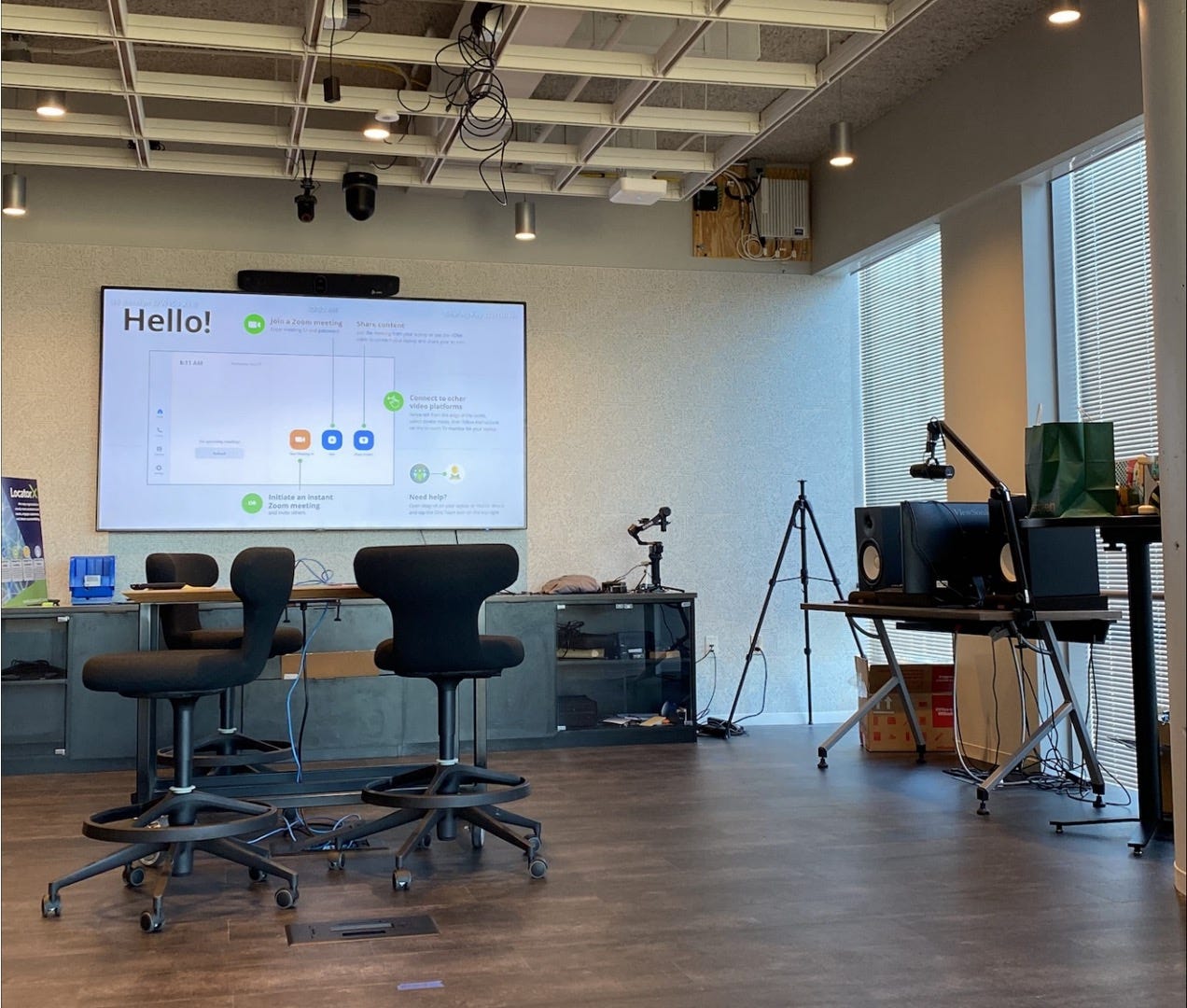
Before photo of the MakerSpace, which was also the IoT Lab, which was also the 5G lab; see anything wrong in this photo?
Thus, after 2 years of failure, a hostile takeover was born with me giving some tough love “if you knew how to do it, you would have done it by now”.
I wrote a charter, set north stars, got funding, and put a radical new idea into motion:
What if we created a speed dating space?
How do we empower clients to date next-curve technologies they’ve never heard of before and understand the economics behind them?
What if they could speed date mad scientists/engineers who were more interested in their tough problem, than selling?
Philosophy & Culture
My clients typically are military and federal government. You sometimes have a technical buyer, but usually it’s an acquisition team implementing the vision of a GS-15, Colonel, COTR, etc. My challenge was to create a space the entire leadership team could visit and empower them to be the hero of their story and develop a shared vision of their future systems-of-systems (SoS).
I banned PowerPoints, use cases, pitches, hype, BD, etc., the team is forbidden to sell. Instead, we must inspire art of the possible. Just like Disney has imagineers to create brilliant theme parks, I lead a team to act as innovators, an experience design firm, and imagineers all at the same time. The mission was to create immersive experiences clients could speed date disruptive technologies and emotionally connect. This is much harder than it sounds because these were my innovation lab criteria:
Must be tangible and physical, no thought products
Storytelling over sales, what’s the business case not use case?
Experiences must have kinesthesia and phonomnesis
Must foster curiosity blooming discoveries in the process
Must exceed expectations
Must demonstrate economic value
Must personify the future
Must show ecosystems of value, not products
Money Follows Momentum
So I started building…
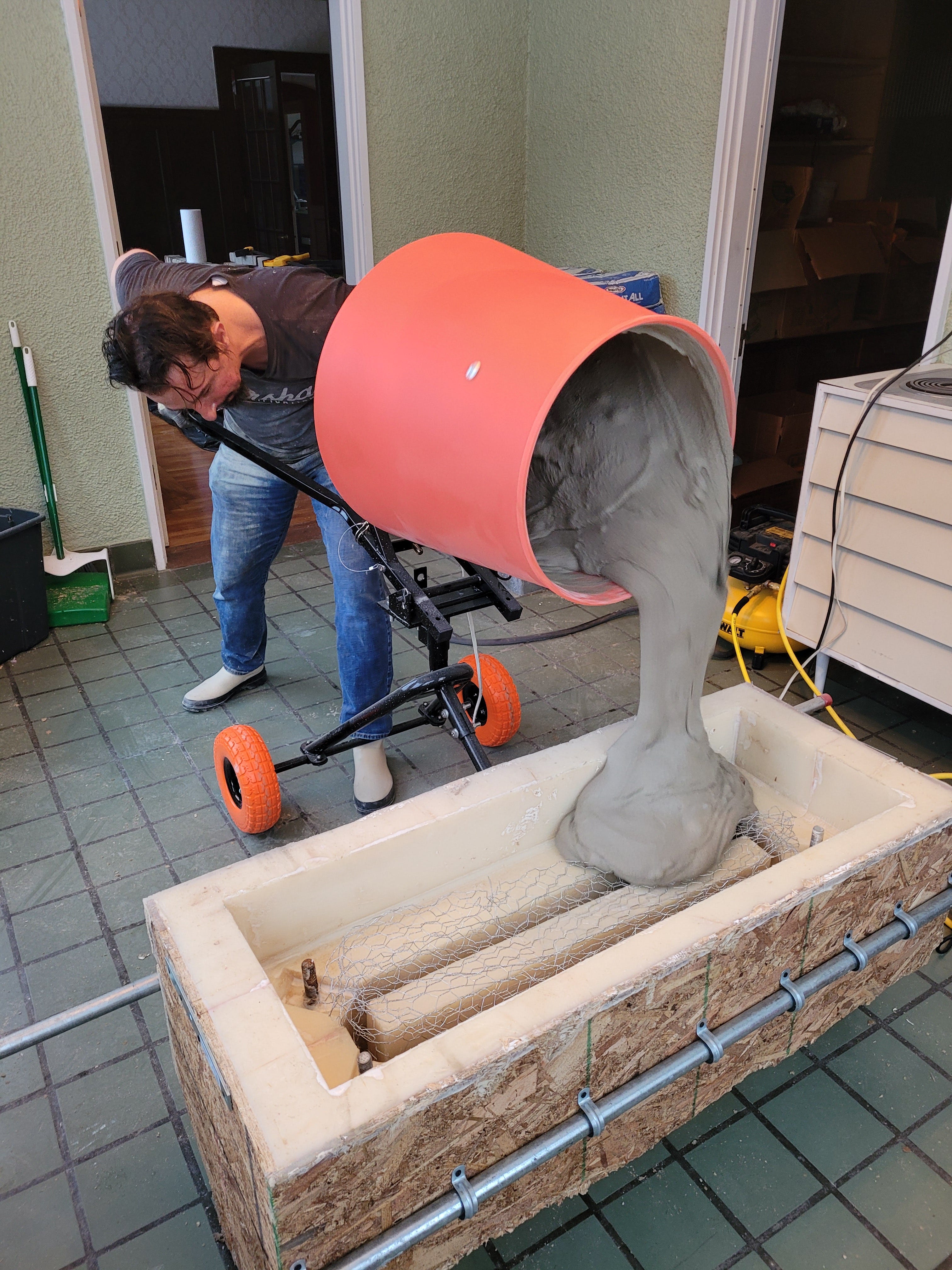
I bought $40 Chinese doors at Home Depot, then vinyl wrapped them. I cast 300 lbs concrete plinths and acid etched them to create the Operational Technology (OT) aesthetic required for our display stations.
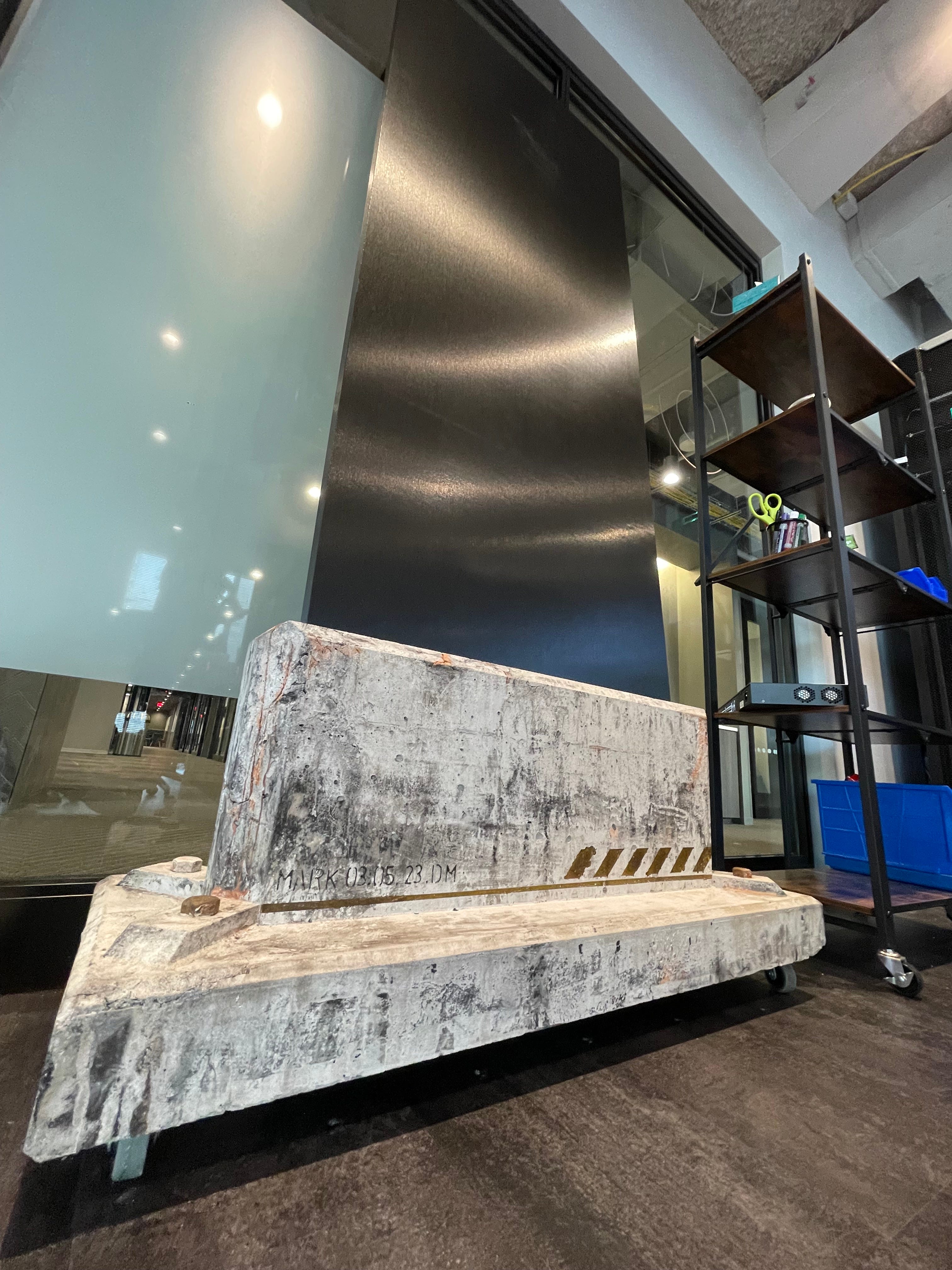
Rolling industrial station boards built for vertical experiences
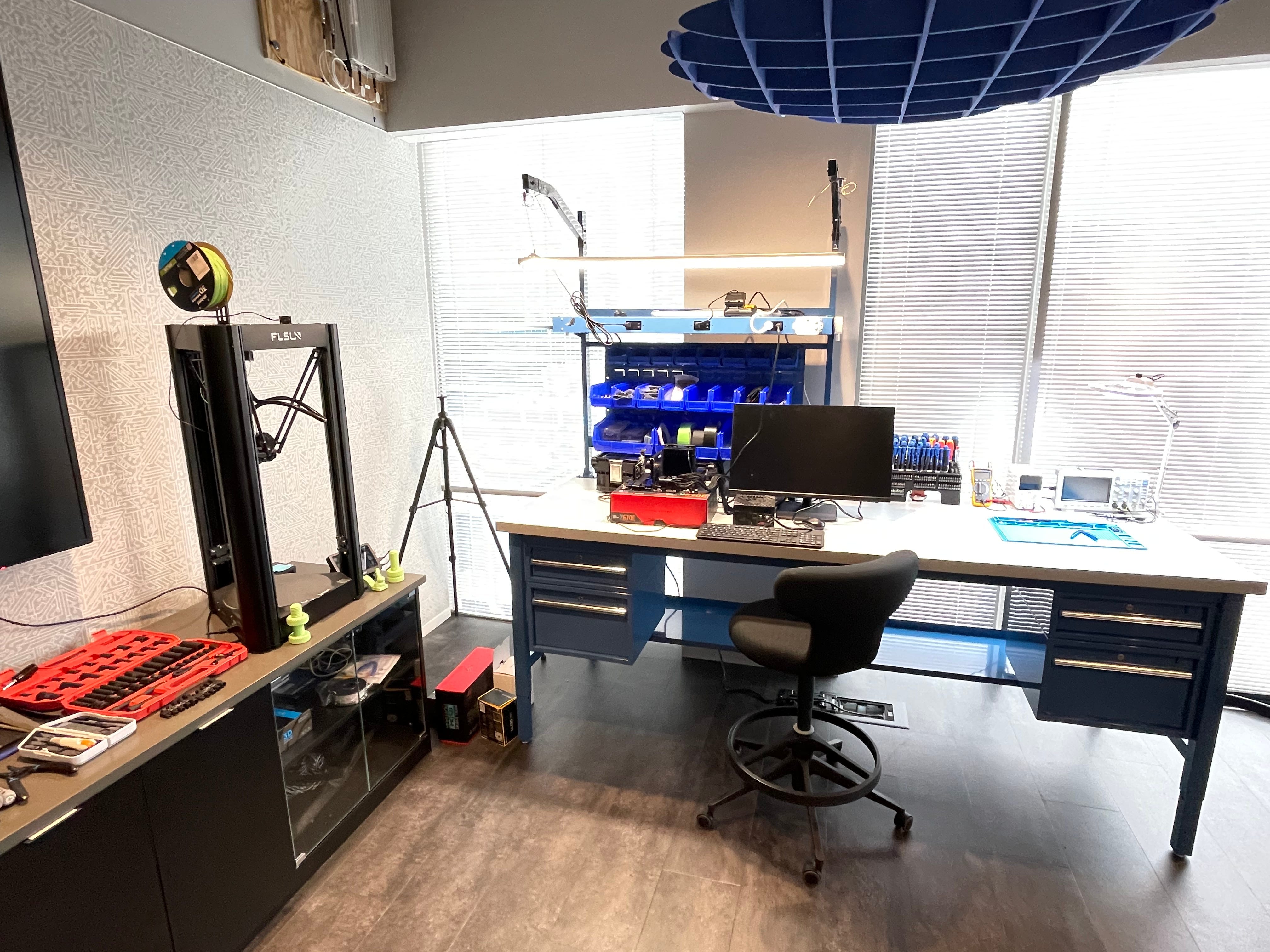
Then I built out the start of a Makerspace to be the minimum tooling to build the core experiences of the the Innovation Lab, but also to serve as the prototyping bench for clients.
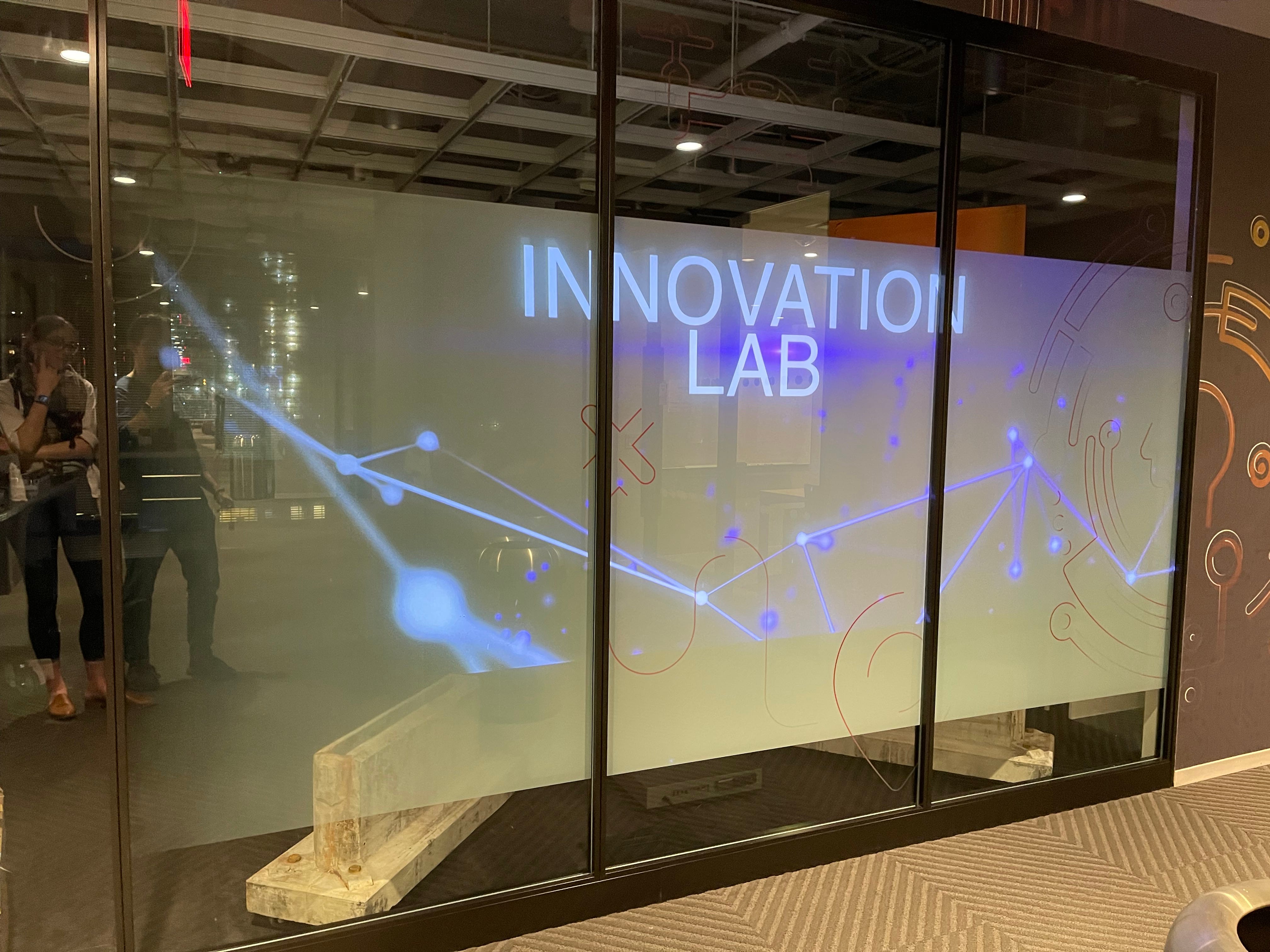
Started with animated dynamic digital signage that promoted the values and domains of the upcoming lab 24/7 on the wall outside the lab.
Below I’m wiring up the jet for a Human Capital Omnipresence experience. Before I had it bolted down to the table it flew off into the wall the second I got my flight controller code working; that required a paint repair.
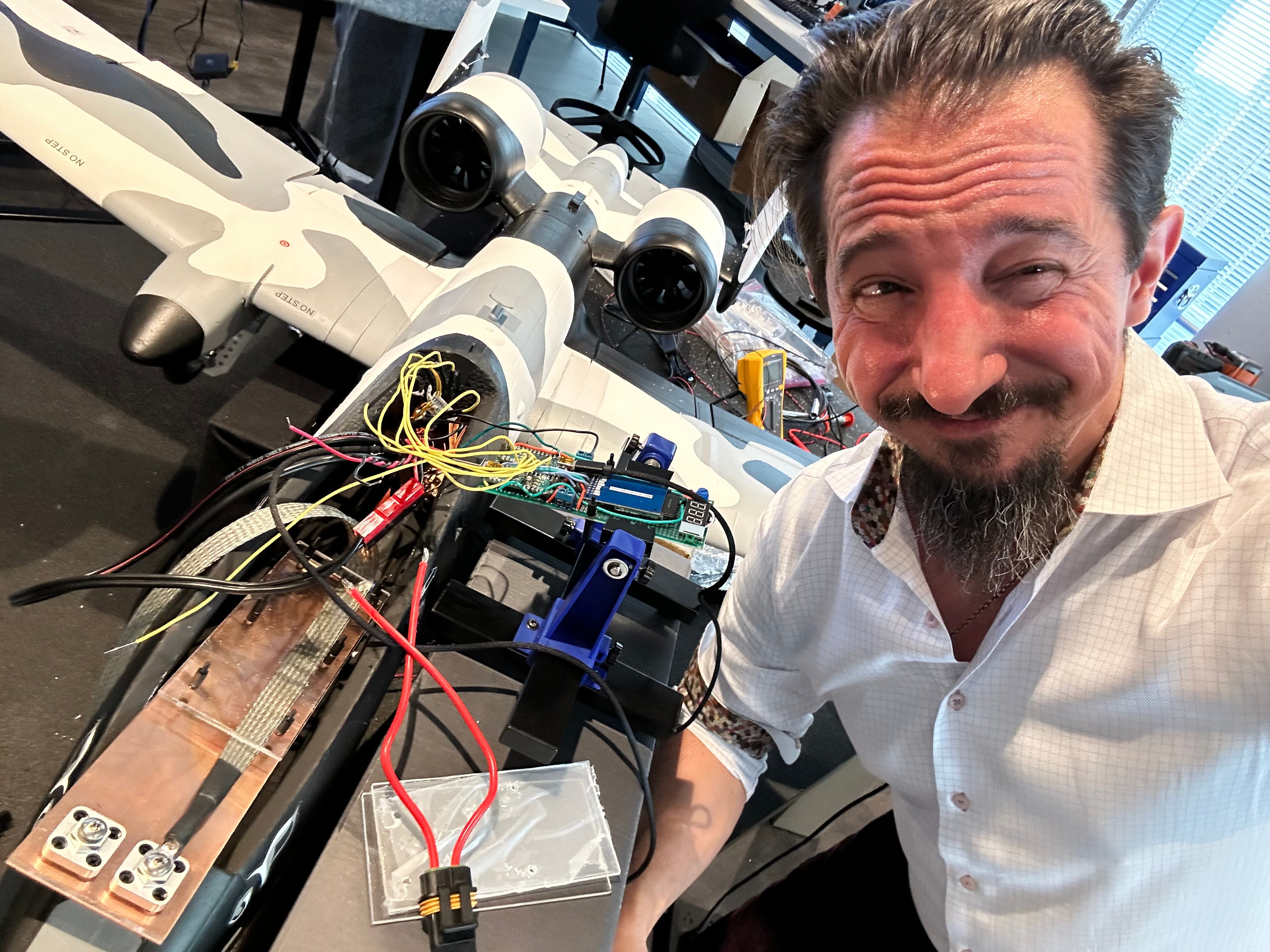
The Human Capital Omnipresence experience involved having clients repair a real jet
Accelerating the Supply Chain of Innovation
Agile for Acquisition became a core part of the process, over 400 purchases in sprints to tool up and do real-time builds. The challenge of creating experiences out of virtual things kept the team up at night. So many innovative things are in the software space, but how do you create a physical experience out of 1s and 0s? Software is virtual, the rules of the innovation lab require it to be tangible.
After many team jam sessions, we cracked the code and an immersive AI for DevSecOps experience was planned out and we built every part by hand. Military leaders had to build their software toolchain by putting the toolchain modules (i.e. Static Code Analysis, Code Compilation, Validation Testing, RMF automation, etc.) in the front in the right order for power and data to flow; glowing bright green in the process. Then they got to vibe code their software at the helm because with AI English is the new programming language. This was all in summer of 2023, years before vibe coding became mainstream which helped clients prepare culturally and in their acquisition strategy for extreme automation.
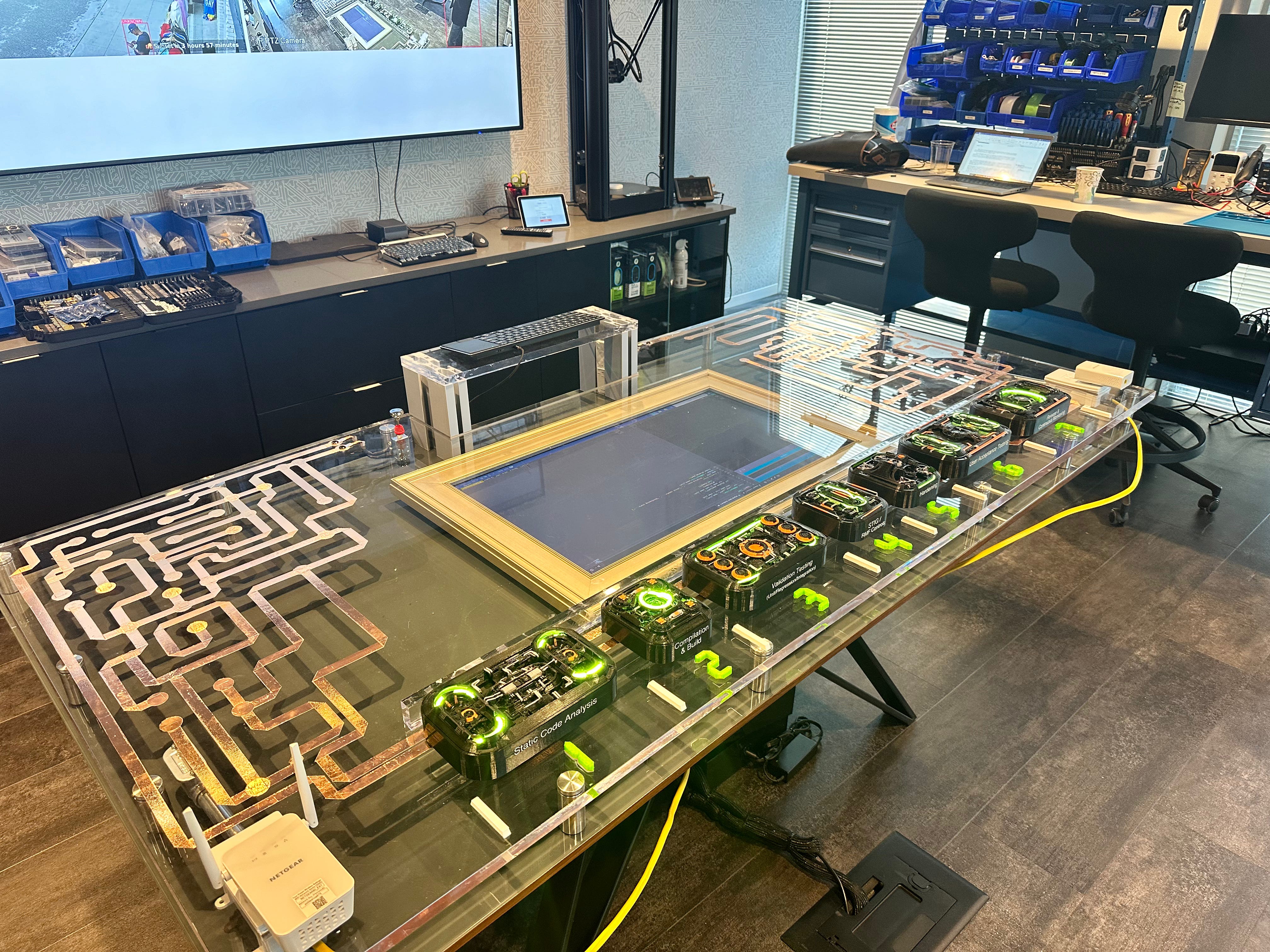
AI for DevSecOps, automating code development with vibe coding in 2023
Advanced Connectivity
During an era dominated by 5G hype, we took the opposite approach and treated data as a drop, not a river. LoRa/LoRaWAN technologies are superior to 5G for IoT and we built an Oil & Water Digitization experience on one of the rolling display boards. Is there a fuel leak is a 1, or a 0; that’s binary. It doesn’t require 5G transceivers, SIM cards, or expensive data plans when LoRaWAN is free ISM spectrum and the parts are fungible.
From rust and corrosion wet maps to autonomous water management, this thing was glowing and pretty. The fun part was the client got to open a valve to create their “leak” and then got text messages instantly. When you think of fuel leaks (i.e. the Camp Lejeune fuel spill) , busted pipes, etc across massive facilities these simple low-cost technologies are an ounce of prevention.
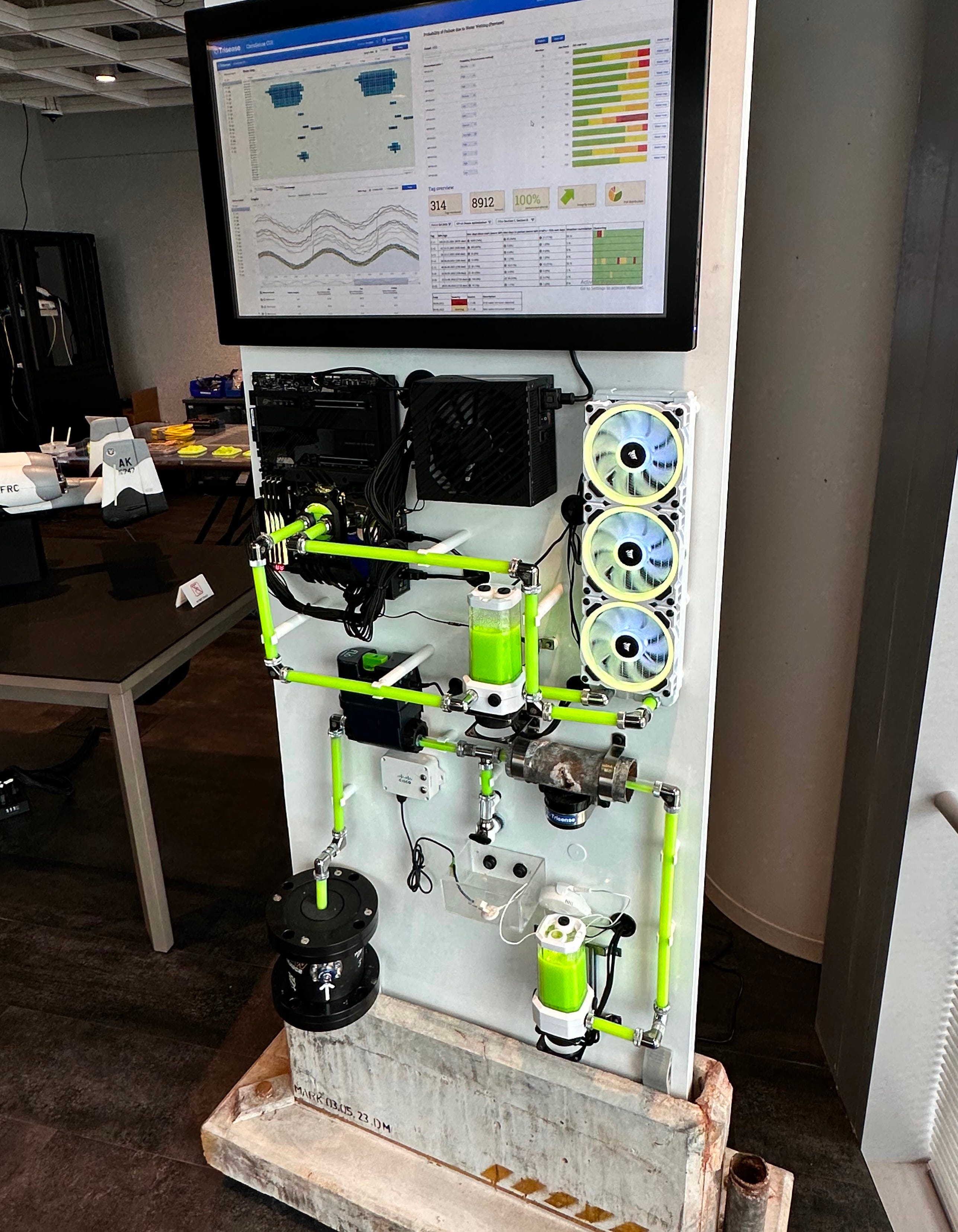
Oil & Water Digitization experience with multiple types of connectivity
Showing a client something they’ve never seen before is literally one of my favorite things. In 2023 we had demonstration of wireless over-the-air power (yes, like WiFi but electricity delivery!) to power systems and drones without batteries. With a field kit below in the lab, the right panel converted DC current to radio frequency (RF) and the little left box receives that RF energy and powers downstream sensors, compute, and signage.
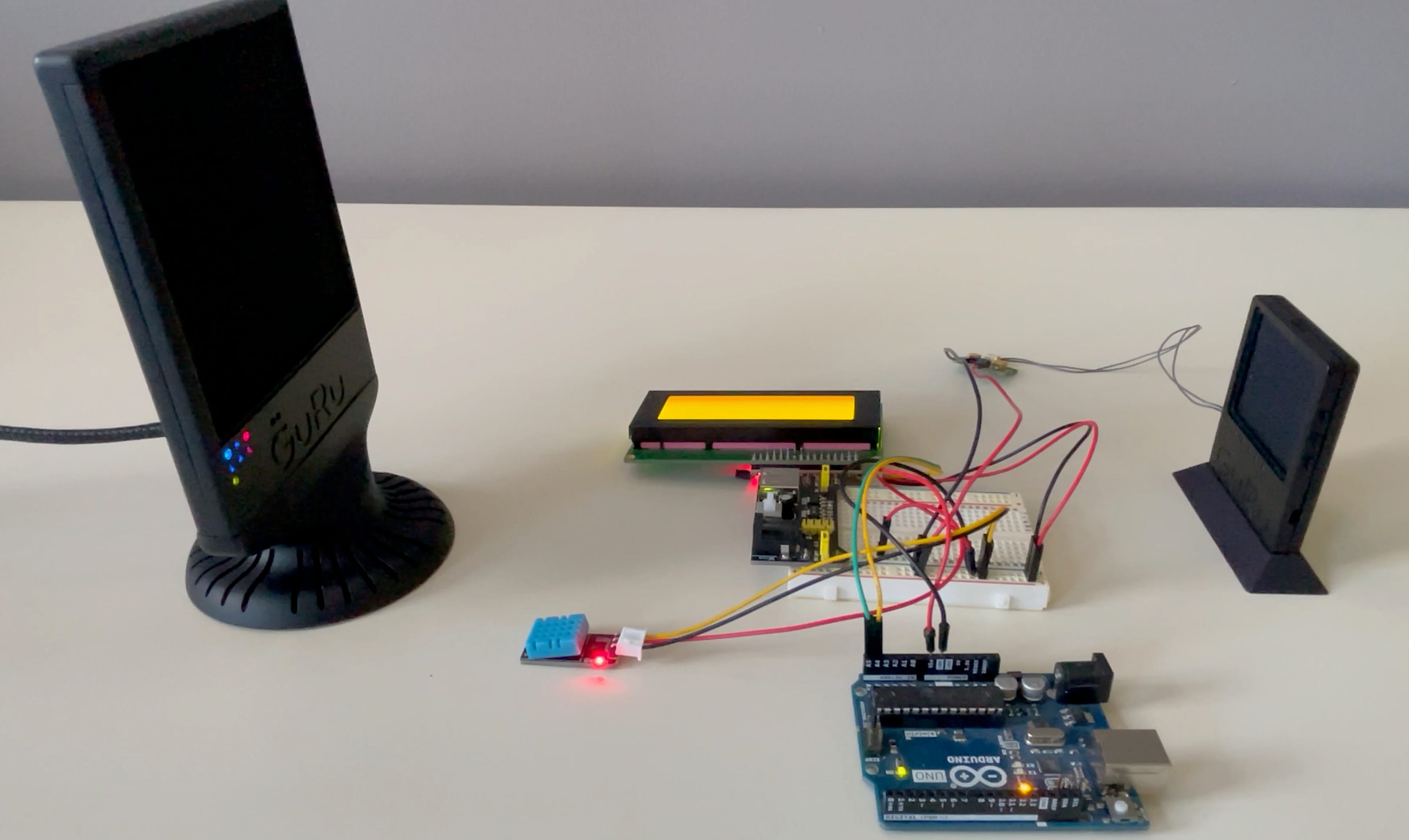
Wireless over-the-air power live demonstration
Our mission technologies practice was predicated on this problem: the enemy combatant, arrest warrant, or forest fire doesn’t follow the 5G coverage map. How do you bring your own network, sensors, and C2 (command and control) into the dark corners of the map. How do you also bring your MANET capabilities up while bringing costs down?
This experience was one of my favorites as we put clients into tactical vests, had them form human-based mesh networks, and deploy a SatCom terminal in seconds to then text their kids from space. With ATAK tied to their bodies, mission data in AR glasses, and hands free, one could put them on a 2 hour scavenger hunt across the building to demonstrate what C2 looks like in the era of self-forming networks.
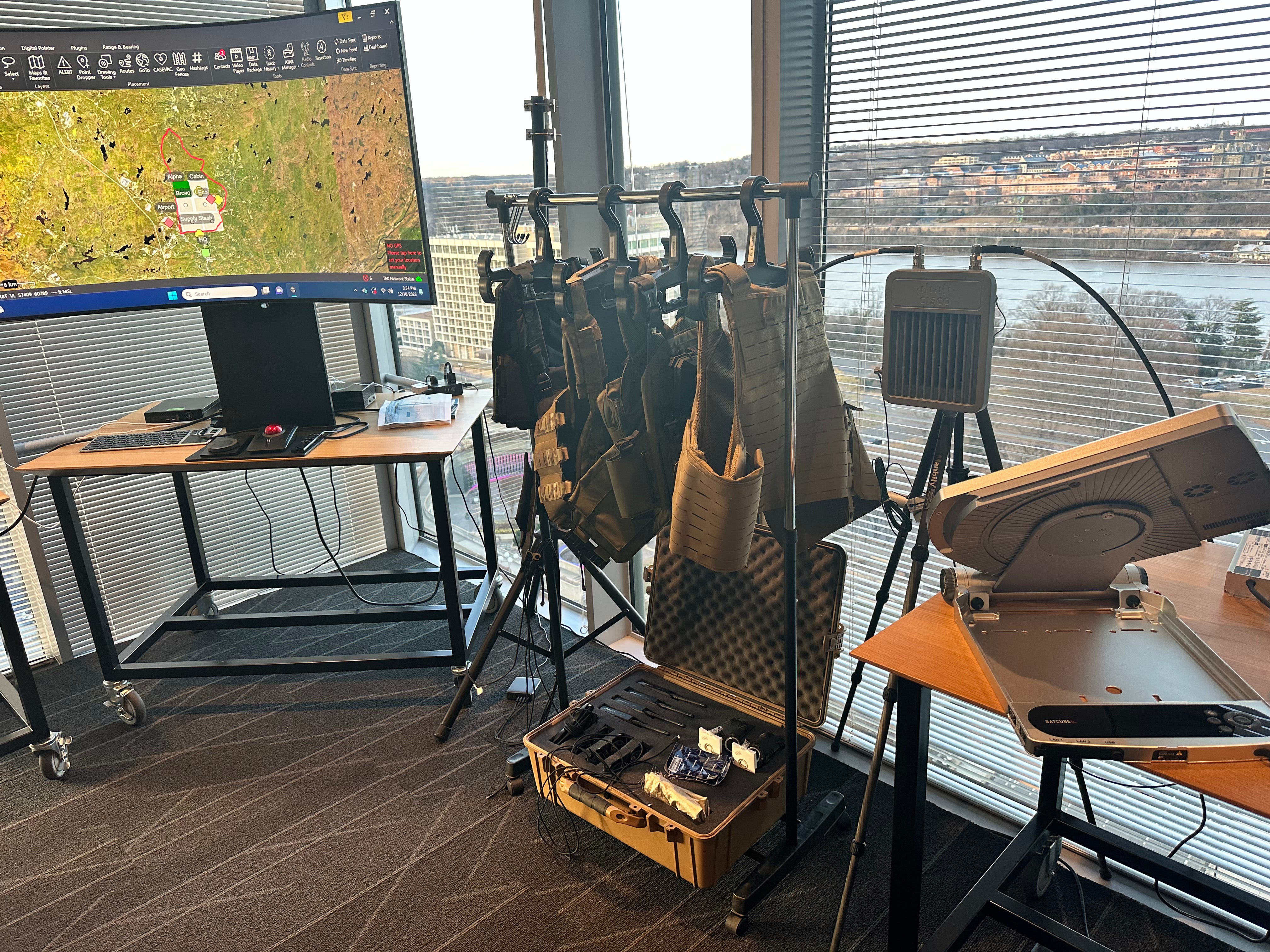
The mission technologies practice experience station before clients suited up
Summary
With 3 months research, 6 months building, and $130,000 total cost, the team and I created 12 unique immersive experiences and several prototypes. We personified the move-fast-and-break-stuff mantra defying corporate policy and the leaders telling us how to buy, how to partner, and what we should have been selling. After launch we were criticized weekly by some partner for not selling the a la mode thing (cloud, blockchain, 5G, VR/AR, AI, etc.) which weighed heavily on the team. As the innovation leader, I learned to push back explaining that “We’re not a carnival barker selling status quo things that are now just mainstream, I’m selling a solution culture to the client’s future.” Clients loved it and it created sales motion with several federal agencies, eureka - innovation!
This Innovation Lab created solution gravity where clients became excited to play with next-curve technologies in a gamified way, learning through immersion not decks. Reputation grew that this was a pitch-free space, come hang out with a mad scientist for a day. It became a space where clients would feel safe to tell me about their problems, and that was the night I slept the best having found a tough problem to solve.
Subscribe for free and never miss an update or story!