

The Problem & Mandate for European Enterprise CEOs
European boardrooms are finally waking up to an existential threat that has been quietly compounding for the last decade; their multi-cloud strategy is just diversified dependency. The digital foundation upon which the European Union’s economy, government services, and critical infrastructure rest is almost entirely controlled by foreign entities and American hyperscalers and business interests.
The pursuit of “technological sovereignty” is no longer just a theoretical debate for policy leaders in Brussels; it has become the defining economic and security mandate of our time. As European enterprises scramble to decouple from American hyperscalers, they are discovering a hard truth: escaping the gravity of Big Tech requires more than just regulatory frameworks. It requires the exact kind of hyperscale engineering and architectural execution that built those monopolies in the first place and recruiting American talent to help.
Here is why the European sovereign cloud movement is about to reshape global technology, and why the secret to achieving European digital independence is, paradoxically, American engineering leadership.
American Vendor Lock as a Risk
Let’s start with the cold, hard data. As of 2025, just three American hyperscalers—Amazon Web Services (AWS), Microsoft Azure, and Google Cloud—control a staggering 70% of the European cloud infrastructure market, leaving local European providers with a meager 15% share.
The scale of dependency is severe. Recent analyses, including a comprehensive study by the German digital association Bitkom revealed that over 90 percent of German companies would not survive more than two years if they were abruptly cut off from essential foreign technologies. That is more than Business Continuity Planning (BCP) or Disaster Recovery (DR), these are national security issues.
The French government is developing and rolling out “Visio,” a homegrown, secure videoconferencing platform designed to replace US-based tools like Zoom and Microsoft Teams for all civil servants by 2027. Developed by the interministerial digital department (DINUM), Visio aims to enhance digital sovereignty, guarantee data confidentiality, and reduce reliance on foreign infrastructure.
This structural dependency represents a catastrophic vulnerability. We have already seen the cracks in this foundation; consider the high-profile incident where the chief prosecutor of an international court temporarily lost access to their Microsoft email account due to external geopolitical sanctions.
To appease European regulators, U.S. hyperscalers have heavily marketed “localized” or “sovereign” cloud zones, promising that data will remain physically within EU borders. But data residency is not data sovereignty. Under the U.S. CLOUD Act of 2018, American tech companies are legally obligated to hand over electronic data to U.S. law enforcement upon request, regardless of where those servers physically reside. If an EU business complies with a U.S. data demand, it breaches GDPR; if the hyperscaler refuses, it faces U.S. legal action.
It doesn’t matter if your cloud availability zone is physically in the EU if the master encryption keys are held by American companies. You cannot claim digital sovereignty if a foreign government holds a legal kill switch to your infrastructure. True digital sovereignty means absolute legal authority, operational control, and cryptographic ownership over your data.
The Economics of “Geopatriation”
The market is reacting violently to this realization. We are entering an era of “geopatriation”—the strategic repatriation of digital workloads to local, jurisdictionally secure environments.
The financial scale of this shift is monumental. Worldwide spending on sovereign cloud infrastructure is projected to surge by 35.6% to reach $80.4 billion in 2026. Europe is leading this charge, with regional investments in sovereign infrastructure expected to grow by an astounding 83% to $12.6 billion this year alone. By 2027, Europe is forecast to completely surpass North America in sovereign cloud spending.
Market analysts predict that driven by geopolitical tensions and strict frameworks like the NIS2 Directive and the Digital Operational Resilience Act (DORA), organizations will shift 20% of their current workloads away from global hyperscalers and onto local, sovereign cloud providers.
A Lesson from 2006: I Built a Sovereign Cloud Before the Term Existed
Back in 2006, long before AWS or Azure had established their global enterprise dominance, I was already navigating this exact trust deficit. For me, the realization that enterprises cannot blindly trust mega-vendors with their data isn’t a new revelation driven by the 2026 news cycle. It is the foundational lesson of my career.
Those in tech know there is no such thing as the cloud, it’s just someone else’s computer. Back in 2006 when Amazon only had S3 (Simple Secure Storage) my clients wanted to rent compute, and convert legacy Client-Server applications to SaaS. My clients were highly regulated corporate enterprises, European aerospace companies, and U.S. government agencies who categorically refused to trust Microsoft or early rack space iterations with their mission-critical data. They demanded a level of operational autonomy and security that off-the-shelf vendors simply could not provide. So I founded Portalogiks (aka CloudMoto) and built a private cloud deploying IaaS and PaaS for my clients.
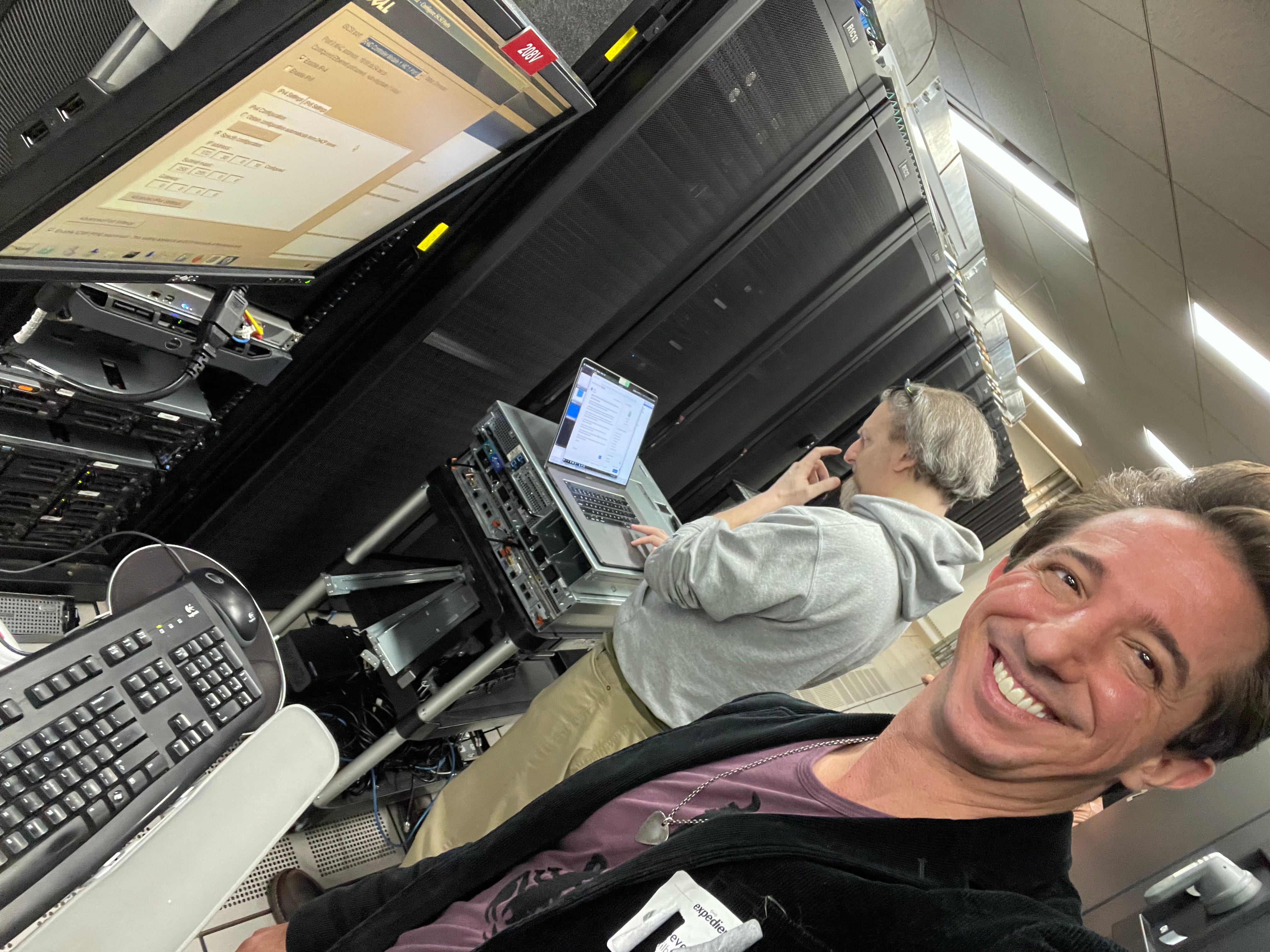
As the founder and Director of Cloud Software, I didn’t just write code; I architected end-to-end sovereign private clouds from the ground up. I toured data centers, learned hardware deterministic planning and procurement, racked servers, migrated data centers, developed DR and BCP plans, built high-availability clustered failover services, all of this before Microsoft Azure had even launched in 2010.
Over the course of a decade, I designed, deployed, and managed multiple generations of high-availability server farms. I taught 3-day boot camps to executive leadership teams in France, the UK, and Germany on how to build and staff their systems. We built custom, air-gapped hyperconverged infrastructure that guaranteed absolute data residency, latency optimization, and disaster recovery. We didn’t rely on AWS to dictate our architecture; we built hundreds of rapid SaaS applications and established our own continuous delivery pipelines. We gave our clients the exact thing Europe is desperately searching for today: control without compromise - speed with results.
The Secret Sauce: Hiring the Architects of the Machine
Today, the EU is pouring billions into initiatives like Gaia-X, the Cloud and AI Development Act (CADA), and sovereign AI gigafactories to break free from American reliance. But Europe has a critical bottleneck: a severe shortage of execution-capable engineering leadership. This presents a profound paradox for European succession planning. To successfully uncouple from American technology giants, European entities need the exact talent that built those systems. You cannot defeat the hyperscale monopoly using theoretical academics; you need a combat-tested engineer who knows the system from the inside out.
European boards are discovering that drafting ambitious regulatory policies is easy; successfully refactoring thousands of legacy applications away from AWS or Azure without triggering a total operational collapse is incredibly hard. Moving away from hyperscalers requires navigating deep technical debt, reversing vendor lock-in, and implementing zero-trust identity fabrics that can withstand rigorous legal audits under NIS2 and DORA.
This is where XERAPHINA and my personal expertise as Innovation Director comes into play. My background bridges the gap between massive, mission-critical U.S. Defense architectures and the agile requirements of the modern enterprise. I have spent years leading blank-canvas innovation labs, developing “Cloud in a Box” decentralized edge compute solutions, and architecting hyperconverged networks that operate under extreme duress.
European companies do not need another consultant to explain the GDPR to them or build a plan-to-make-a-plan. They need:
A Divorce Ambassador: Helping clients break up with their cloud providers and consulting firms. Succession planning requires technical governance and how to break up with your ex-cloud.
Designer to True Sovereign Infrastructure: Transition reliance from proprietary SaaS to self-hosted, federated open-source ecosystems.
Operationalized AI Compliance: Deploy localized AI inference and agentic workflows that train on sovereign data without leaking IP to foreign servers.
Executed Migrations: Refactor massive legacy monoliths using non-invasive reverse proxies and modern DevSecOps pipelines, seamlessly moving workloads from U.S. public clouds into secure, European-owned data centers.
Who Told You the Cloud needed a Warehouse?
There is an unspoken downside of the cloud that few talk about. Back when I started my tech career in 2001, anyone in IT leadership could easily tell you that a Dell PowerEdge 2950 server was 2U in rack space, cost a few thousand each, weighed 70 pounds, and required 1,000 watts of power. As a result of everything going to the cloud, leaders have lost the ability to internalize what compute feels like, smells like, and the physically of hardware. The cloud and infrastructure-as-code has abstracted away that physically which is now a liability for business leaders who never participated in this era and it affects their business decisions.
One of my favorite things to do as an innovator is show a new form factor that replaces the traditional thinking opening a new dimension to possibility. Back in 2024 while supporting CENTCOM (a combatant command for the Middle East region in the U.S. military) I had the opportunity to show my Internet in a Box demonstration.
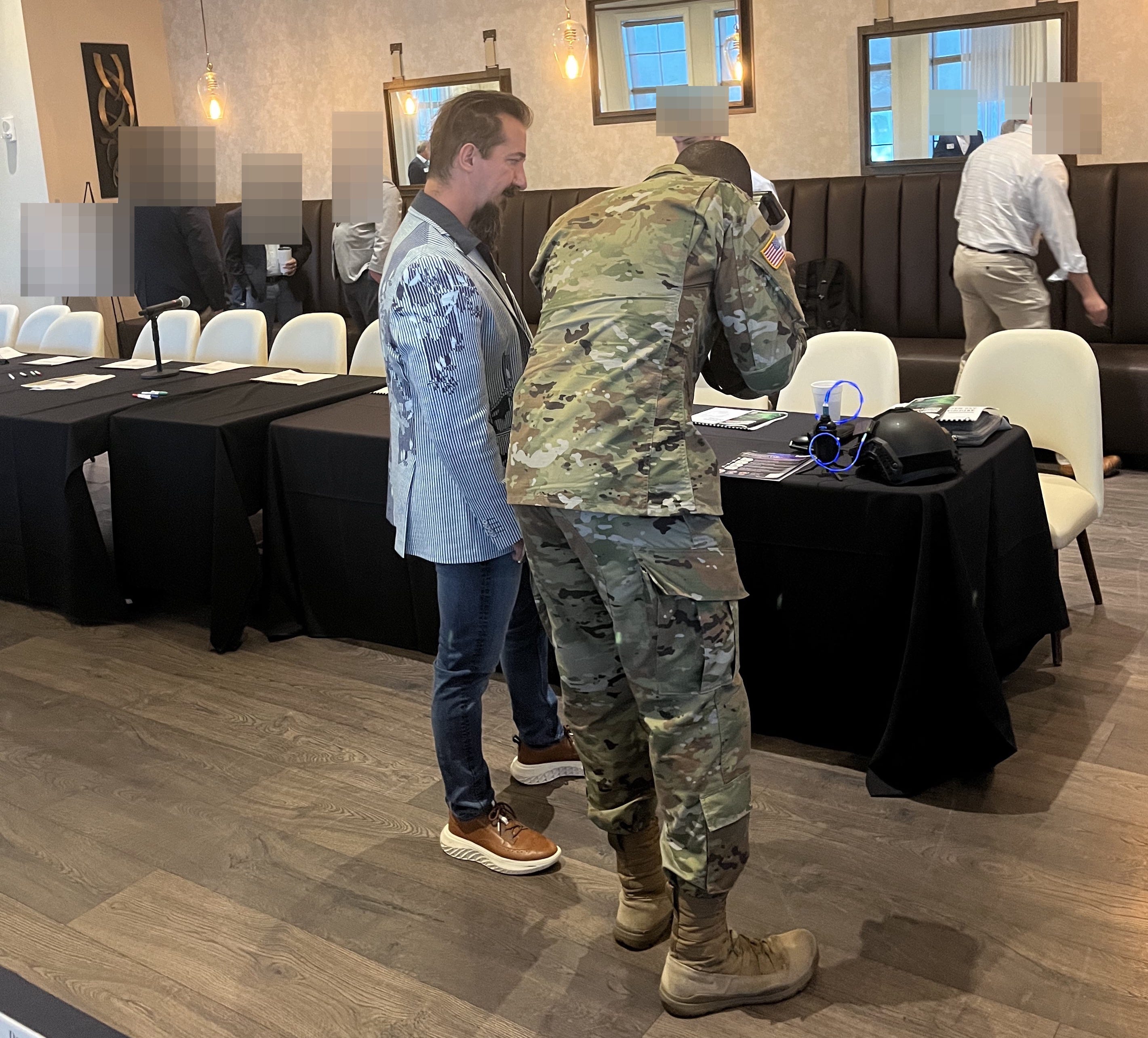
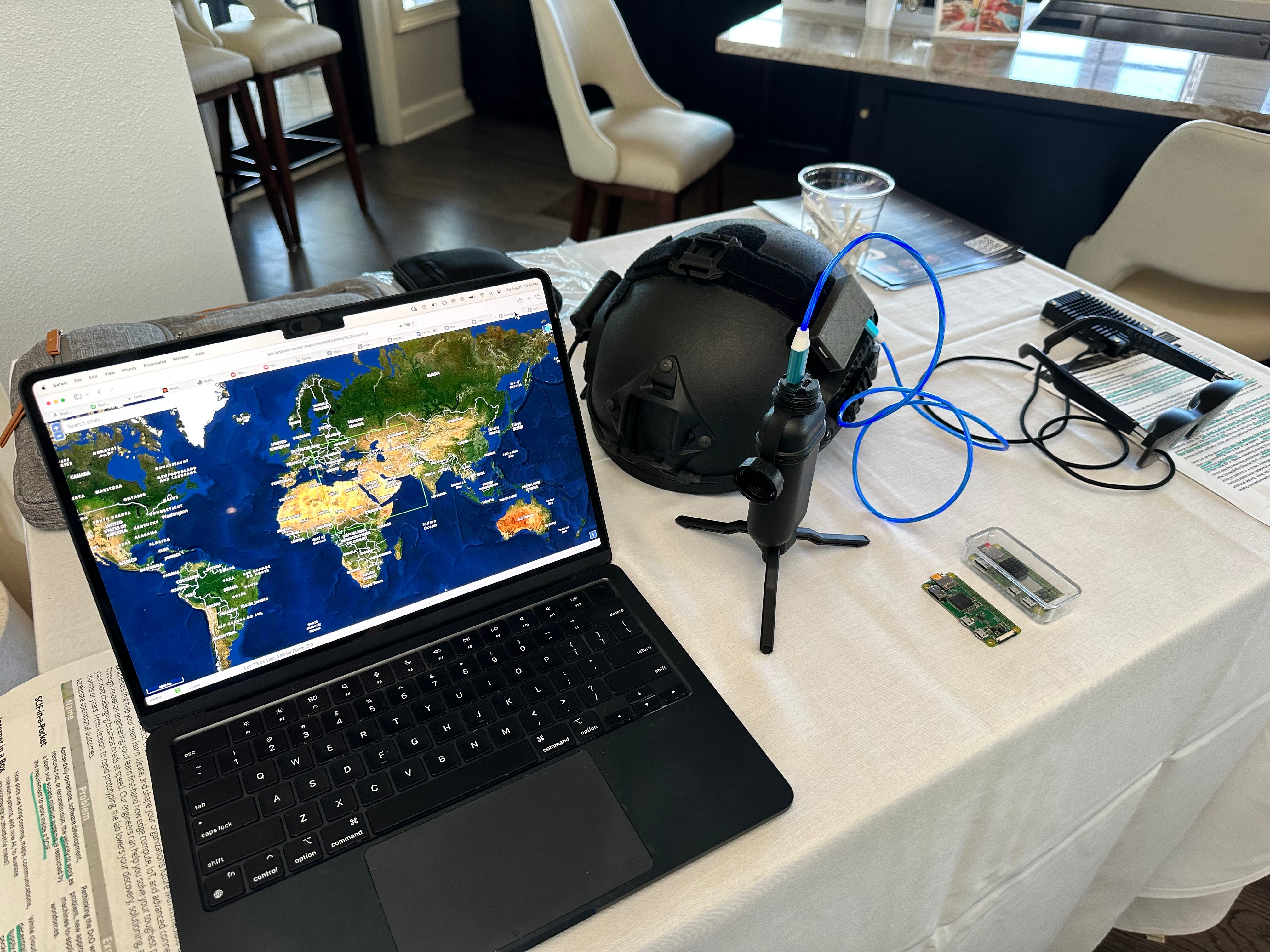
Imagine a portable server that is the size of your car’s key fob. Imagine loading specific mission applications and the key internet territories into a wearable device that only costs $15. In this demo I have every world map down to street view, all 7 million Wikipedia pages, a learning management library with thousands of videos, and your mission application all on a thumb-sized 1-watt server broadcasting it’s own private WiFi network.

In the image below, the laptop is connected via WiFi to a Raspberry Pi Zero putting out its own WLAN as a private network for end devices to connect to load applications. The solider’s helmet is the server, the laptop and nearby phones are merely connecting to access multiple applications in real-time in a secure local loop bypassing all ISPs, cloud providers, and foreign influence.
The point of this demonstration was to show that you don’t need the cloud to do applications or AI; you need computational connectivity. Watch the entire tear down and use case video below from 2024. If this demo utterly challenges your perception of what the cloud is, then I was successful.
The Path Forward
The window for European enterprises to secure their digital borders is closing. As AI exponentially increases the value of enterprise data, relying on foreign infrastructure is no longer just an IT risk; it is a profound liability to national security and corporate survival.
At XERAPHINA, we specialize in this exact transformation. We bring the aggressive, rapid-prototyping velocity of the American tech sector and apply it strictly to the values of European privacy, compliance, and technological sovereignty.
If your organization is ready to move beyond the illusion of localized hyperscale zones and build true digital independence, you need leadership that has actually built the bare metal. Let’s talk about how we can architect your sovereign future.
Related Article Links & Resources
Yahoo: Digital sovereignty: Can Europe’s businesses survive without US Big Tech?
SoftwareOne: Digital sovereignty: What it is — and why it matters to your business in 2026
Data Innovation Lab: “Europe’s Quest for Digital Sovereignty: Where We Stand and What Lies Ahead”
Accenture: Europe Seeking Greater AI Sovereignty, Accenture Report Finds
McKinsey: Accelerating Europe’s AI adoption: The role of sovereign AI