

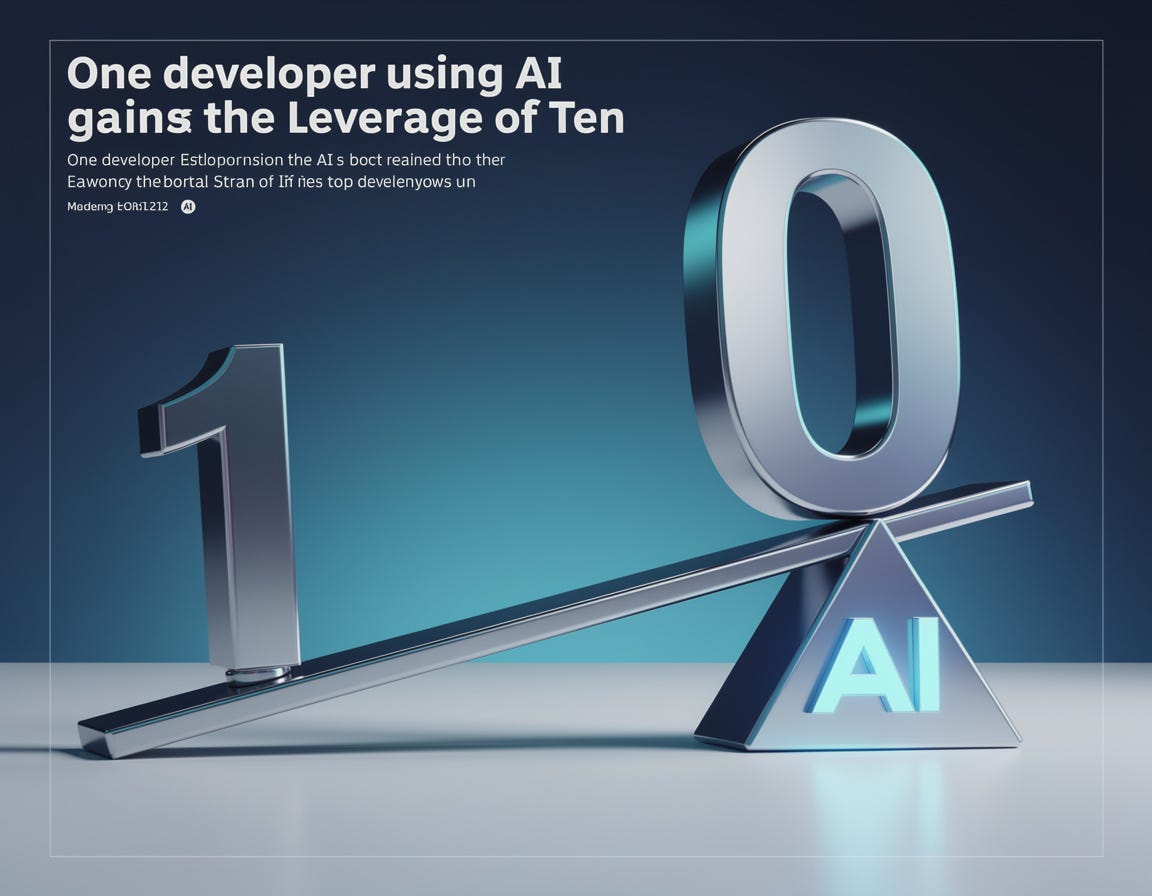
In the movie biopic on BlackBerry, there’s this moment where the AT&T CEO secretly partners with Apple on their new iPhone and considers BlackBerry phones old hat. The AT&T CEO shoots down the BlackBerry CEO saying “there’s only so many minutes, in a minute” as he walks away from a deal. Remember that pre iPhone era (circa 2007) you bought minutes as part of your mobile phone plan. The inflection point in the telephony industry was you cannot bill for more minutes then there are in an hour, but we can bill you for more data. I feel like we’re at that exact moment with AI transforming the workforce right now with labor.
As a former DevSecOps Director I have a staffed many software teams from private industry to the Air Force. I also have a few software developer friends in my life and these are some of the most talented and expert software developers I’ve ever met. Despite their incredible coding skills, it surprised me to learn they are all using Claude code to write 100% of their code now. While vibe coding is fun and fast, what’s disruptive is that by themselves as one individual, they are now running a cadre of AI agents building multiple software programs in tandem; like 3-10 parallel agents building at the same time. This is the equivalent work of 1 person doing the work of a few 2-pizza DevSecOps teams! To understand how much of a force multiplier this is, the below chart outlines the typical Full Time Employee (FTE) structure to hire, lead, and govern a DevSecOps team managing a single software application.
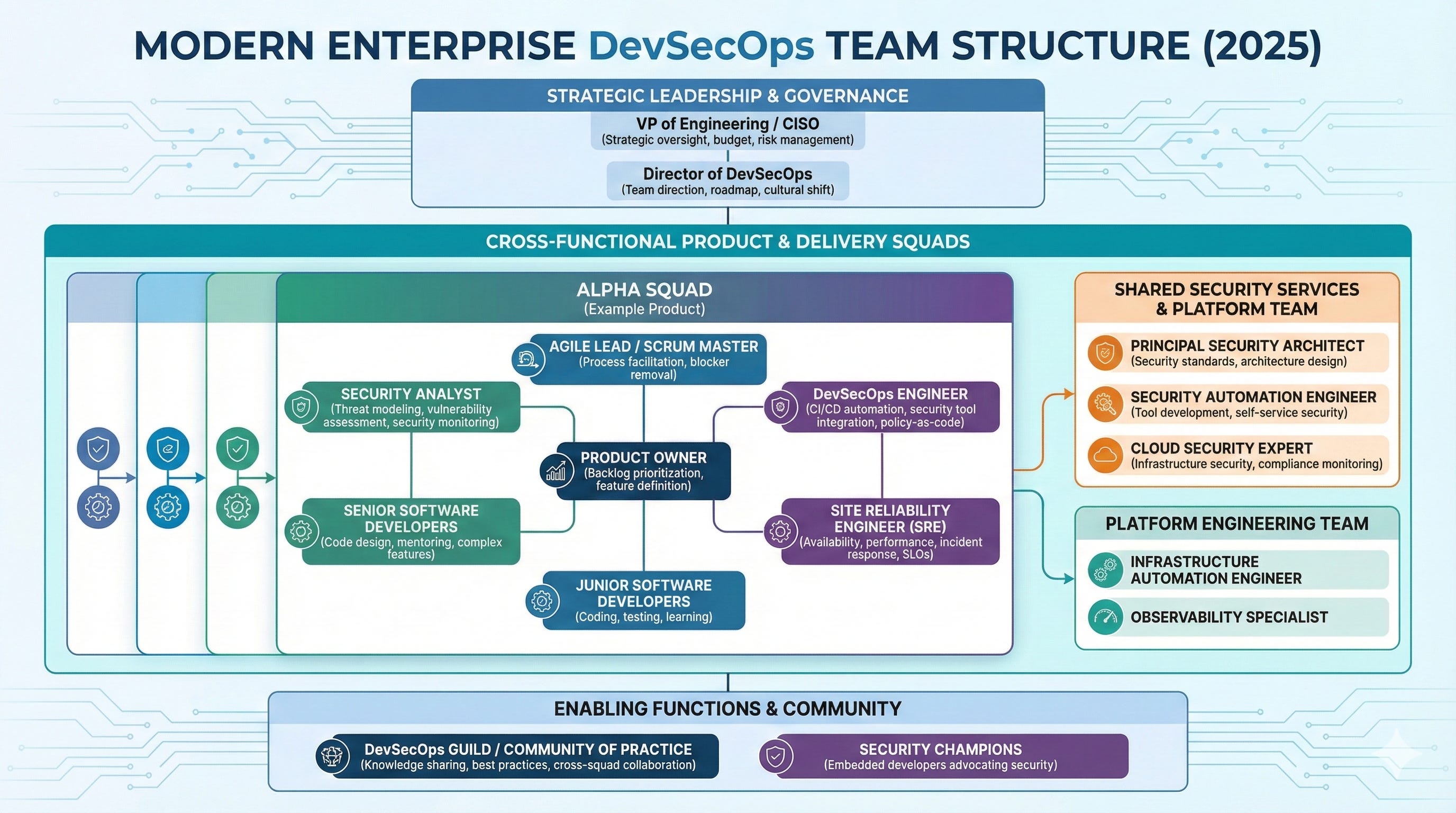
Old Staffing Model | Ratio of FTEs to Software is 5-10:1
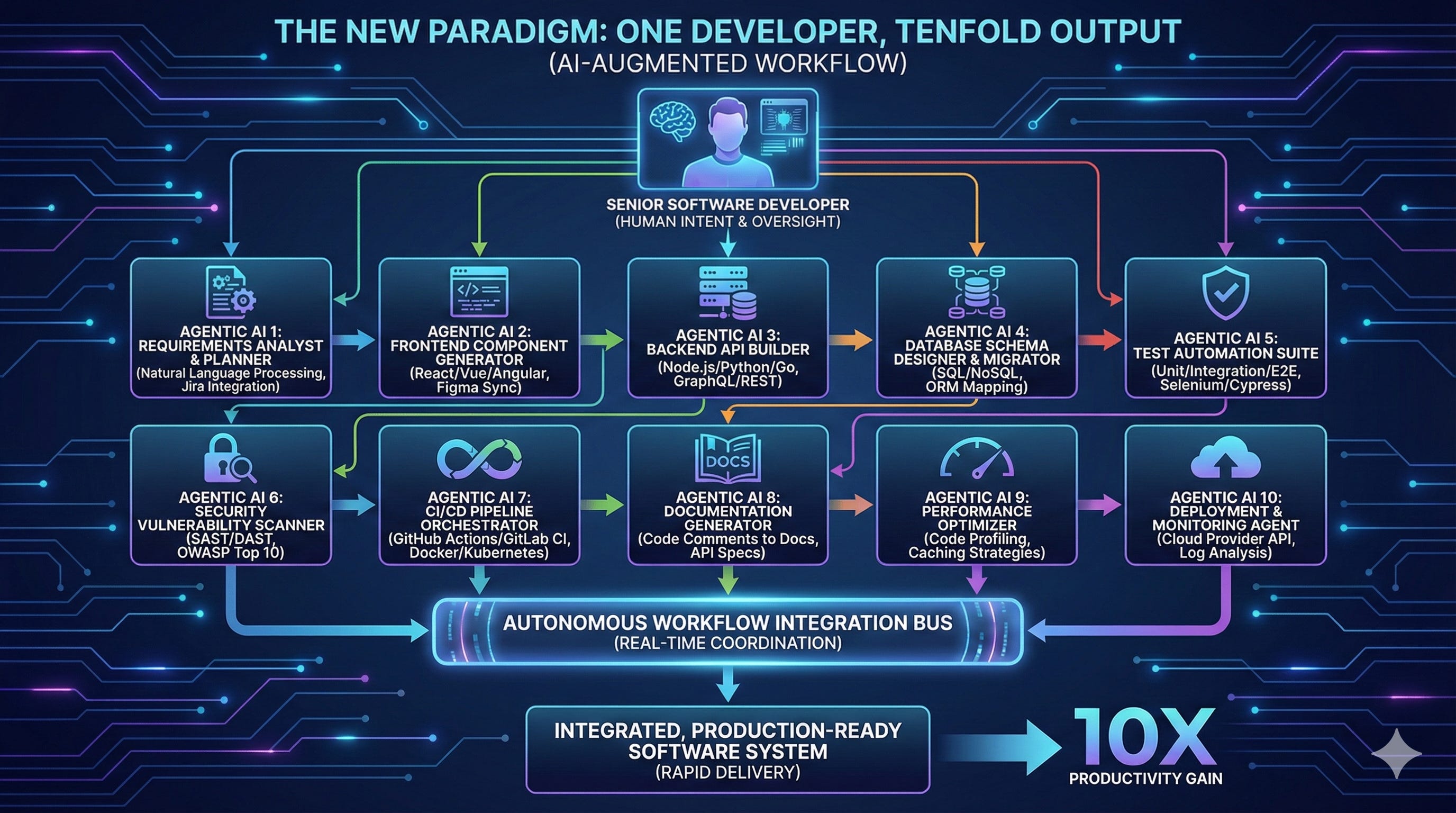
New Staffing Model | Ratio of FTEs to Software is 1:10
AI went from chat toy to business tool, and like any tool organizations will adopt tools if it they accelerate results and lower costs. It’s an economic decision, plain and simple. Like it or not, AI is selling the capacity to innovate in a chaotic world through workforce scaling. It solves a throughput question of how do you add more work hours to the day without making your employees work harder or incurring more expenses. Using AI tools become force multipliers in the workplace where a single software engineer has the power of the entire team of yesteryear.
Leading an innovation firm with clients who rely on my guidance to plan for the future, this trend is going to be much larger than just software development in the decade ahead. Keep in mind approximately 70% of software is written for other humans to do their job; the remainder is typically machine-to-machine software.
For example, right now software teams built project management software (JIRA, MS Project, Monday.com, etc) for humans to input data and report out progress. The Scrum Master is now obsolete when a single software engineer and Claude can automate every step of the process and produce functioning software faster than the Agile sprint itself. So why do we need the SaaS-based project management software and its costs now? Why do we need the Scrum master? We’ll be getting to a point that AI can do the task the human managing the software was supposed to do, thus why do we need that software and human GUI in the first place? I predict that by the year 2030 we’ll see the rise of machine-to-machine software rise closer to 50% as AI workloads assume the roles of knowledge workers, designers, project managers, and even leadership roles as they can demonstrate the 10X efficiency gains like this.
Just like mobility learned “there’s only so many minutes in a minute” any manager knows there’s only so many hours in a workday. AI has the power to increase design output while decreasing costs, in any century that is the reason all organizations will adopt it eventually.